
Pet Stain & Odor Removal Castle Rock CO
Enzyme treatment that reaches the pad, where dried urine crystals hide in our dry climate until the first humid afternoon wakes them up.
Castle Rock, CO and central Douglas County · Calls may be recorded for quality and training purposes.
Between the open-space trails, the big fenced yards, and a town culture that treats a leashed dog as standard equipment, Castle Rock households skew heavily canine — and every dog town generates the same carpet casualty list. What makes pet odor tricky here specifically is the climate: our dry air flash-dries accidents so quickly that they often go unnoticed, leaving uric-acid crystals stored in the pad like seeds. They wait through the dry months and bloom into smell the moment humidity returns. Owners tell us the odor "comes and goes," and they are exactly right.
Our pet stain and odor removal in Castle Rock, CO therefore starts with finding everything, not just the spot you called about. A blacklight-and-moisture-probe survey maps each contaminated area, including the long-dried ones. Enzyme solution is then applied generously enough to reach the pad — the layer where the crystals actually live — and given genuine dwell time to digest them. Finally, weighted subsurface extraction pulls the dissolved waste up and out of the house. Removed, not relocated, and never simply perfumed.
First aid that helps — and the kind that backfires
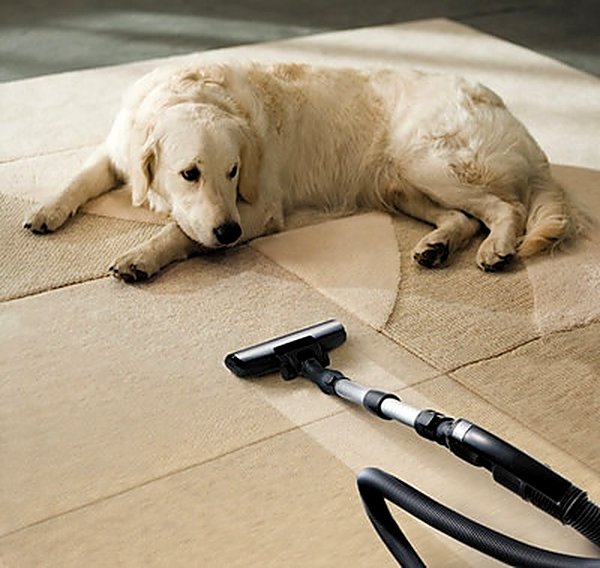
A surprising share of "permanent" pet damage was set by the cleanup, not the accident. Scrubbing frays the pile into a fuzzy patch that outlasts the stain. Ammonia products read as another animal's marking and invite a repeat on the same square foot. Oxygen bleach on a mystery spot can strip dye and convert a treatable stain into a permanent pale one. And flooding the area from a rental machine drives urine outward through the pad, tripling the treatment zone. The useful version is simple: blot straight down with plain paper towels until nothing more transfers, flag the spot with painter's tape, and let the chemistry arrive with the crew.
Two problems wearing one spot
The mark and the smell are separate jobs. Odor is biology — crystals and bacteria the enzymes digest — and it resolves in almost every case. The visible stain is dye chemistry: fresh accidents usually clear completely, while old urine that has yellowed the fiber may lighten dramatically without vanishing. You get that verdict spot by spot at the walk-through, before money changes hands. High-altitude sunlight complicates the picture on carpet near sliding doors — what looks like an old pet stain is sometimes UV fade, which no cleaning can reverse — and we will tell you the difference honestly.
Booking the pet call in Castle Rock
Describe the situation as it actually is — one bad weekend, a favorite corner, or a whole basement level that needs rescue — and (303) 974-4558 converts it into a realistic range on the phone. Most pet work is scheduled as part of a carpet cleaning visit, which is the cheapest way to buy it.
Frequently Asked Questions
The room only smells on stormy afternoons or when the humidifier runs. Why?
I cleaned the spot myself and it looked fine. Did I fix it?
Is enzyme treatment safe for the animals themselves?
Are cat accidents genuinely harder than dog accidents?
When is treatment not enough?
What does pet treatment cost in Castle Rock?
End the pet smell for good in Castle Rock
Call (303) 974-4558 for a free phone quote — enzyme treatment at pad depth, honest per-area pricing, across Castle Rock and Douglas County.